
What Is Common Law Marriage? States, and Legal Rights

Marriage creates a legal relationship between two people and gives them important rights. However, not every couple chooses a traditional wedding or marriage ceremony. Some couples live together and consider themselves married without completing formal marriage paperwork. This raises an important question: what is common law marriage, and how does it work under United States law?
What Is Common Law Marriage?
Common law marriage is a legally recognized marriage without a traditional wedding ceremony or marriage license. Instead, couples establish their marital relationship by meeting specific requirements under state law. Both partners must agree to be married and show the conduct that the law requires. Simply living together does not automatically create a legal marriage.
This form of marriage has existed in the United States for many years. It developed from legal traditions that recognized marriage agreements without formal ceremonies. Today, only a limited number of states allow couples to establish new common law marriages. Other states may recognize valid marriages that couples established in different jurisdictions.
How Does Common Law Marriage Work?
Common law marriage works through mutual agreement and the actions of two legally eligible partners. Both individuals must agree that they are married rather than simply plan to marry later. Depending on state law, they may also need to share a home and publicly identify themselves as spouses. Courts examine these circumstances when someone questions the marriage’s legal status.
For example, a couple may live together and introduce each other as spouses. They might also share financial accounts or identify themselves as married on official documents. These actions may support their claim that a legal marriage exists. However, courts consider the complete situation rather than relying on one statement or document.
Understanding common law marriage helps couples recognize their legal rights and responsibilities. Marriage laws differ across states, so couples should understand the rules that apply to them. Other legal topics, such as implied consent law, also show how specific laws can create rights and responsibilities. Learning about different legal requirements can help individuals make informed decisions.
Common Law Marriage Requirements in the United States
People researching what is common law marriage should understand the basic legal requirements. Most states that recognize this arrangement require both partners to have the legal ability to marry. The couple must also share a present agreement to enter a marital relationship. Some jurisdictions require cohabitation and public recognition as additional evidence.
Requirements differ because individual states control their marriage laws. A couple may qualify in one state but fail to meet another state’s rules. Therefore, partners should understand the laws that apply to their relationship. A family law attorney can explain specific requirements when questions arise.
| Requirement | Explanation |
|---|---|
| Mutual agreement | Both partners agree to enter a marriage |
| Legal eligibility | Both individuals must be legally free to marry |
| Cohabitation | Some states require couples to live together |
| Public recognition | Partners may need to present themselves as married |
| State recognition | The relationship must meet applicable state laws |
Which States Recognize Common Law Marriage?
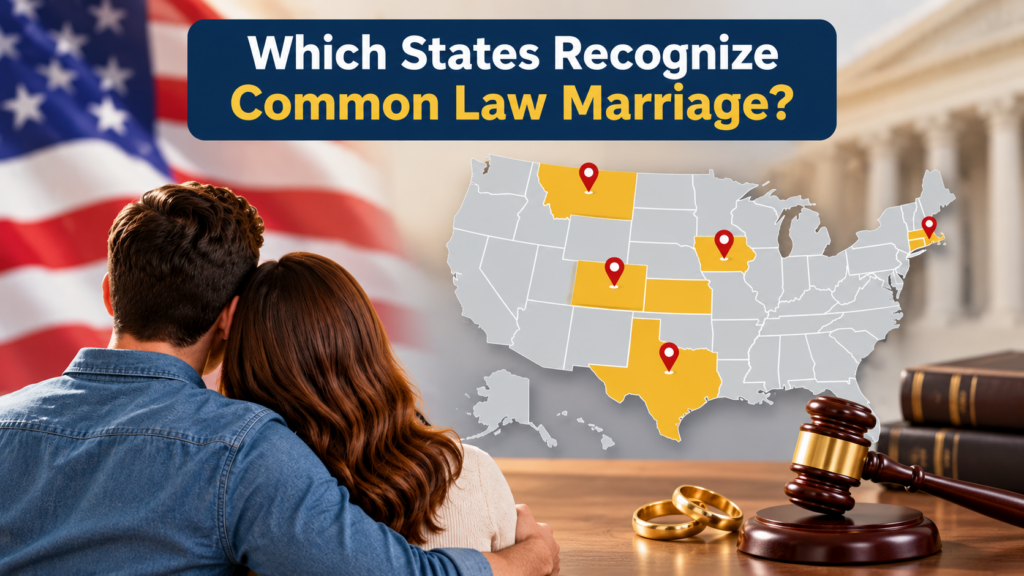
Only a minority of American jurisdictions recognize the formation of new common law marriages. These include Colorado, Iowa, Kansas, Montana, Rhode Island, Texas, and the District of Columbia. Oklahoma also recognizes qualifying common law marriages through its court decisions. However, each jurisdiction applies its own legal requirements.
Utah offers a special court process for recognizing qualifying relationships as marriages. New Hampshire provides limited recognition for certain inheritance matters after a partner dies. Meanwhile, states such as Alabama and South Carolina recognize some marriages formed before their laws changed. Couples should review current state laws before assuming their relationship qualifies.
| State or Jurisdiction | Common Law Marriage Status |
|---|---|
| Colorado | Recognizes qualifying marriages |
| Texas | Recognizes informal marriages |
| Iowa | Recognizes qualifying marriages |
| Kansas | Recognizes qualifying marriages |
| Montana | Recognizes qualifying marriages |
| Rhode Island | Recognizes marriages under case law |
| Oklahoma | Recognizes qualifying marriages through case law |
| District of Columbia | Recognizes qualifying marriages |
| Utah | Offers a special judicial recognition process |
| California | Does not allow new common law marriages |
| South Carolina | Stopped allowing new common law marriages in July 2019 |
How Many Years Do You Have to Live Together for Common Law Marriage?
Many people believe that living together for seven years automatically creates a legal marriage. However, there is no general seven-year rule for common law marriage in the United States. Even couples who share a home for twenty years may remain legally unmarried. The law focuses on specific requirements rather than the length of the relationship alone.
Living together may help show that two people share a committed relationship. However, cohabitation cannot replace the required agreement to marry. Courts may also examine public statements, documents, and other evidence of marital intent. Couples should never assume that time alone gives them legal marriage rights.
Common Law Marriage vs Traditional Marriage
When comparing what is common law marriage with traditional marriage, the main difference involves how couples establish their relationship. Traditional marriage generally requires a marriage license and an authorized ceremony. Common law marriage allows qualifying couples to establish marital status without those formal steps. However, both arrangements can create the same legal rights once a valid marriage exists.
Traditional marriage usually provides an official certificate that helps prove marital status. Common law spouses may need additional evidence to establish their marriage. This difference can become important during divorce, inheritance disputes, or government benefit applications. Both types of valid marriage create legal responsibilities for the spouses.
| Feature | Common Law Marriage | Traditional Marriage |
|---|---|---|
| Wedding ceremony | Not required | Generally required |
| Marriage license | Not required to establish marriage | Generally required |
| Mutual consent | Required | Required |
| Legal recognition | Depends on applicable state law | Recognized when legally performed |
| Spousal rights | Available in valid marriages | Available in valid marriages |
| Divorce | Generally required | Required |
Legal Rights and Benefits of Common Law Marriage
A valid common law marriage generally provides the same legal rights as a traditional marriage. These may include inheritance rights, property division, and financial support after divorce. A surviving spouse may also qualify for certain Social Security benefits. However, individual benefit programs have their own eligibility requirements.
For example, a legally recognized spouse may qualify for survivor benefits after their partner dies. Couples may also have rights involving shared property and financial responsibilities. However, the rules for property ownership and spousal support vary between states. Understanding these differences can help couples make informed financial decisions.
A valid common law marriage generally provides the same legal rights as a traditional marriage. These rights may include inheritance, property division, and financial support after divorce. Couples who need help with estate planning or inheritance matters can consult an elder law attorney to understand their legal options. Professional legal guidance can help spouses protect their assets and financial future.
How to Prove a Common Law Marriage
Couples often ask what is common law marriage when they need to prove their legal relationship. Unlike traditional marriages, these relationships may not have a standard marriage certificate. Therefore, partners may need documents that show their agreement and conduct as spouses. Courts and government agencies may review several forms of evidence.
Useful evidence may include joint financial records, insurance documents, and statements from relatives. Publicly identifying each other as spouses may also support a marriage claim. In Texas, qualifying couples can file a Declaration of Informal Marriage with their county clerk. However, no single document proves every common law marriage in every state.
Can You Get a Divorce From a Common Law Marriage?
A valid common law marriage generally requires a legal divorce when the relationship ends. Couples cannot simply declare themselves unmarried by moving into separate homes. Once partners establish a valid marriage, they usually follow the same divorce procedures as other married couples. Courts may address property division, debts, financial support, and child custody.
Divorce can become complicated when one partner denies that a marriage existed. In these situations, a court may first determine whether the couple established a valid marriage. Both partners may need to provide evidence of their agreement and marital conduct. Professional legal guidance can help couples understand their rights during separation.
Advantages and Disadvantages of Common Law Marriage
Understanding what is common law marriage also involves considering its advantages and disadvantages. One benefit is that qualifying couples can establish a legal marriage without organizing a traditional wedding. A valid marriage may provide inheritance protections and access to certain government benefits. This arrangement can appeal to couples who prefer a less formal approach.
However, common law marriage can create uncertainty when partners disagree about their relationship. Proving the marriage may require documents, witnesses, or court proceedings. Couples may also misunderstand their financial responsibilities during separation. These challenges make it important to understand applicable marriage laws.
Is Common Law Marriage Recognized in Other States?
Many couples wonder what is common law marriage when they move between states. Generally, states recognize valid marriages that couples legally established in another state. This means a common law marriage may remain valid after relocation. However, specific legal exceptions and unusual circumstances can affect recognition.
For example, a couple may establish a valid informal marriage in Texas and later move to California. California does not allow couples to form new common law marriages within the state. However, it generally recognizes marriages that couples legally established elsewhere. Keeping supporting records can help spouses prove their status after moving.
Common Misconceptions About Common Law Marriage
Several myths surround common law marriage in the United States. Some people believe that sharing bills, raising children, or living together automatically creates a marriage. Others think couples can end this relationship without filing for divorce. These misunderstandings may cause serious legal and financial problems.
Another common myth suggests that every state follows the same marriage requirements. In reality, each jurisdiction applies its own rules for establishing a valid marriage. Couples should also understand that public recognition alone may not satisfy every legal requirement. Checking state laws can prevent confusion about marital status.
Why Understanding Common Law Marriage Matters
Learning what is common law marriage can help couples make informed decisions about their future. Marriage affects important matters such as inheritance, property ownership, taxes, and financial responsibilities. Couples who misunderstand their marital status may face unexpected legal problems. Clear information can help partners plan their lives with greater confidence.
Partners should openly discuss whether they intend to establish a legal marriage. They should also understand how their state recognizes and regulates marital relationships. When necessary, they can consult a qualified family law attorney for guidance. Taking these steps may help protect both partners’ interests.
Frequently Ask Question
What Is Common Law Marriage?
Common law marriage is a legally recognized marriage formed without a traditional wedding ceremony or marriage license. Couples must meet specific legal requirements, which vary by state.
How Long Do You Have to Live Together for Common Law Marriage?
There is no fixed number of years required for common law marriage. In states that recognize it, couples must meet legal conditions, such as agreeing to be married and presenting themselves publicly as spouses.
Which States Recognize Common Law Marriage?
Several U.S. states recognize common law marriage, including Texas, Colorado, Iowa, and Kansas. Each state has different requirements, while some states only recognize marriages established before a specific date.
Is Common Law Marriage the Same as Legal Marriage?
Yes, a valid common law marriage generally provides the same legal rights and responsibilities as a traditional marriage. These may include inheritance rights, property division, and spousal support, depending on applicable laws.
Conclusion
Understanding what is common law marriage is important for couples who live together without a traditional wedding. This form of marriage can provide legal recognition when partners meet the applicable requirements. However, living together for a specific number of years does not automatically establish a marriage. State laws determine whether a couple qualifies and what evidence they need.
Common law marriage can provide valuable legal protections, but it also creates responsibilities. Couples should understand the rules governing property, inheritance, benefits, and divorce. Because marriage laws differ across states, checking local legal requirements remains essential. Knowing your marital status can help protect your rights and prevent future legal disputes.