
No-Contest Divorce Lawsuit: Definition, Legal Process, Costs, and Key Legal Considerations
Unfortunately, divorce is often stereotyped as a long, drawn-out court case. It is, of course, an emotional battle, but assuming it’s always a long legal fight isn’t always the reality. Essentially, a no-contest divorce (also called an uncontested divorce) is a legal dissolution without any challenge to the divorce. It is completely legal and compliant with the law.
The process is typically quicker when both parties agree the marriage is irretrievable. This makes it easier to work out other important issues, including child custody and financial support, property division, and more.
A no-contest divorce is also far less stressful and far less costly. This article is your go-to guide about No-Contest Divorce.
Reality of a No-Contest Divorce in Different Countries
While the specifics of a no-contest divorce vary from state to state, knowing how a no-contest divorce works can help you make the process more efficient as a couple. People who cannot afford the filing costs may also need to submit an affidavit of indigency to request a waiver of eligible court fees.
In the United States:
The family law in the United States is state-based. There is no one federal law. Rather, the “no-contest” divorce is legal according to the Domestic Relations or Family Law Statutes of your state.
In California, for example, it is processed under the California Family Code, and in New York, under the New York Domestic Relations Law. Most states handle these as “No-Fault Divorce” and let the couple separate without having to prove fault.
In the UK:
In the United Kingdom, the Matrimonial Causes Act 1973 (amended by the Divorce, Dissolution and Separation Act 2020): England and Wales have ‘no-fault’ and uncontested divorces, where a couple must state that the marriage has irretrievably broken down, without a court battle.
No-Contest Divorce in Canada:
In Canada, the Divorce Act (Federal): Canada has a federal divorce law that governs divorce nationwide.
In this case, a divorce may be filed uncontested (also called a joint or sole undefended divorce) when the spouses have lived apart for a year or longer and agree on all terms of the divorce.
What is a No-Contest Divorce?
A no-contest divorce is when one spouse files for divorce, and the other does not contest it. Both parties agree to dissolve the marriage; rather than contesting it, they agree to end it.
What are the Key Considerations Of it?
In most cases, they also decide how to divide marital property, pay off debts, where the kids will live, who will see them, how they will be supported, and how the other spouse will be supported before the court makes its final decision on the divorce.
Although “no-contest” implies otherwise, it is no different than an ordinary divorce in that there are still legal steps to be taken. The court must still review the submitted documentation and decide whether the settlement is fair and complies with family law.
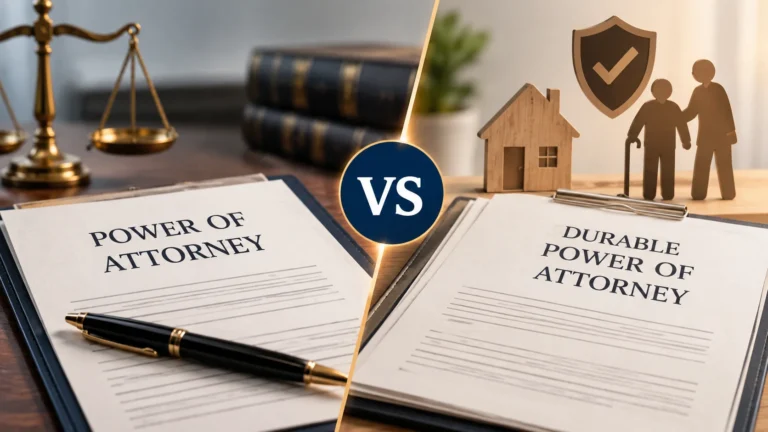
Divorce can also require spouses to review other legal arrangements they made during the marriage. For example, understanding what is durable power of attorney can help a person review whether an existing authorization should remain in place after major family or legal changes.
Eligibility Requirements
Eligibility for a no-contest divorce varies by country and state. In general, spouses must meet residency requirements to file, and some states require a minimum marriage and/or separation period.
In most modern legal systems, fault does not have to lie with either party, and the cause of a divorce is limited to an irretrievable breakdown of the marriage or irreconcilable differences.
Although there are still some states that have adultery and cruelty as grounds for divorce, this is not usually done in an uncontested divorce where both parties agree to the end of the marriage amicably.
The Divorce Process
There are typically some simple steps involved in the procedure of a no-contest divorce. The first step in filing for divorce is for one spouse to petition the proper court for a divorce. The petition states the grounds for divorce and requests the divorce.
Then, the court serves the petition on the other spouse. Instead of challenging the filing, each responding spouse signs the documents to consent to the filing or does not object.
Agreement of Settlement Takes Place
Both parties draft a thorough settlement agreement once they agree on the terms. Key issues include division of property, debts, child custody, parenting time, child support, and spousal support (if applicable).
Once the paperwork is filed, the court will consider the agreement. Many jurisdictions have no such trial, and uncontested divorces are finalized without one. However, some courts hold a relatively short trial to determine whether both parties entered the agreement of their own free will.
What is the Expected Waiting Period?
Lastly, when the waiting period has passed (usually 12 months after filing for divorce), the court grants the final divorce. Finally, after the waiting period (typically 12 months from the filing of divorce), the court issues the final decree of divorce, which legally terminates the marriage.
Conclusion
A no-contest divorce provides a cooperative way to resolve a divorce proceeding without the traditional litigation process.
While this can be challenging, when spouses work cooperatively to resolve issues, they can save money on the legal battle and reach a legally binding resolution. The law varies based on jurisdiction, and cooperation between the parties is key to an uncontested divorce.




One Comment