
What is a DC Minimum Wage Lawsuit?
To understand “What is a DC minimum wage lawsuit?” we first need to comprehend what this lawsuit means. The word ‘DC’ in the phrase refers to Washington, D.C., which tells us which jurisdiction this law is for. This law applies to employers who fail to pay workers the minimum wage required in Washington, DC.
A DC minimum wage lawsuit involves much more than simply being paid below the minimum hourly rate. Claims can include unpaid overtime, tip credit, split shift, unpaid working time, or employee misclassification.
As of July 1, 2026, Washington, DC’s minimum wage is $18.40 per hour for most workers. The base cash wage for tipped employees is $10.30 per hour. Employers must ensure that wages and qualifying tips together reach the full minimum wage.
Here is what employees and employers should know about DC minimum wage lawsuits.
What Is a DC Minimum Wage Lawsuit?
A DC minimum wage lawsuit is a legal claim brought by a worker who alleges that an employer violated Washington, DC wage laws.
Common allegations include:
- Paying less than the applicable minimum wage
- Failing to pay overtime
- Failing to pay for all hours worked
- Improperly taking a tip credit
- Failing to provide required split-shift compensation
- Misclassifying an employee
- Withholding wages that were legally owed
A single lawsuit can involve several of these issues at once. Readers interested in other types of legal disputes can also review the Nightfall Group lawsuit to understand how different allegations can develop into formal legal claims.
Some Examples of DC Wage Claims
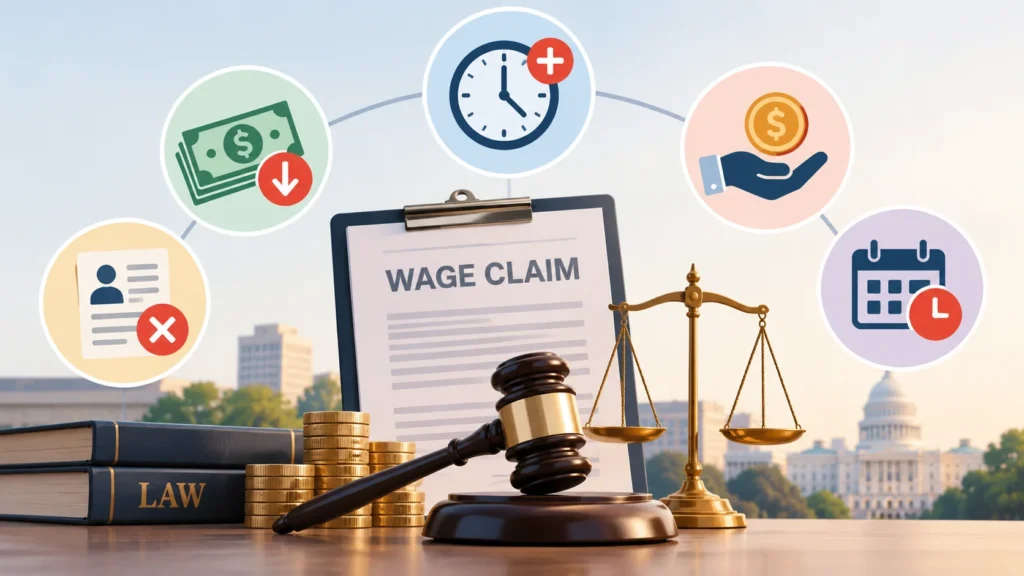
On what grounds can an employee challenge his employer in Washington, DC, given his salary is not according to the state law? Let’s find out.
Unpaid Minimum Wages
An employee may have a claim if they were paid less than the applicable DC minimum wage for covered hours.
For example, someone who should have received $17.95 per hour during the July 2025–June 2026 period but received less may potentially have an unpaid-wage claim.
Unpaid Overtime
Eligible employees generally must receive one-and-a-half times their regular rate for qualifying hours worked beyond 40 in a workweek.
For example, an employer that records an employee as working 40 hours when they actually worked 50 could face an overtime claim.
Tip-Credit Violations
Tipped employees are subject to special rules. As of July 1, 2026, the base tipped wage is $10.30 per hour. However, tips and the employer-paid wage must satisfy the District’s full minimum-wage requirement.
If the employee’s qualifying tips and wages do not reach $18.40 per hour, the employer may need to make up the difference.
Unpaid Hours/Off-the-Clock Work
Employees may also bring claims for work they perform that is not recorded or paid.
This could include certain preparation, closing, administrative, or other work performed before or after a scheduled shift.
Split-Shift Pay
Certain qualifying split shifts can create an additional compensation requirement under DC wage rules.
A split shift generally involves separate work periods during the same day separated by an extended break. Under applicable rules, an employee may be entitled to an additional hour at the minimum wage for a qualifying split shift.
Misclassification
Some wage lawsuits involve workers who were incorrectly classified as independent contractors or exempt employees.
Simply calling someone an “independent contractor” or “exempt employee” does not necessarily determine their legal status. The actual working relationship and applicable legal requirements matter.
Administrative Complaint vs. DC Minimum Wage Lawsuit
Workers generally have more than one avenue for pursuing unpaid wages. An employee can submit a complaint to the DC Office of Wage-Hour Compliance (OWH), which can investigate alleged wage violations.
A worker may also be able to file a civil lawsuit. These processes are different, although both can potentially result in recovery of unpaid wages. Because wage claims have deadlines, employees should avoid waiting until the last minute before deciding what action to take.
What Can You Recover From a DC Wage Lawsuit?
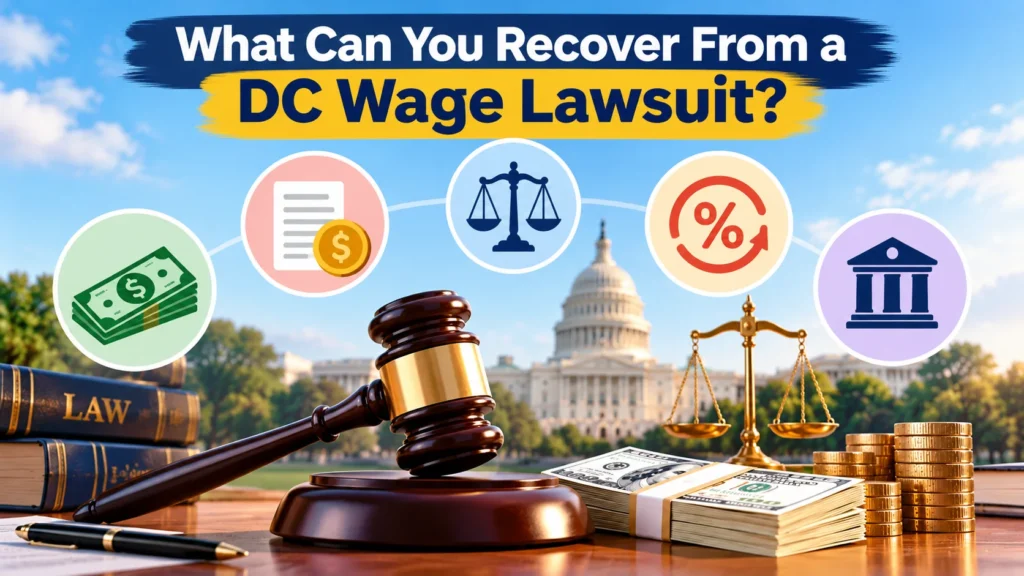
A successful wage claim can result in more than unpaid hourly wages.
Depending on the circumstances and applicable law, available remedies may include:
- Back wages
- Liquidated damages
- Attorney’s fees
- Court costs
- Interest
- Other appropriate legal or equitable relief
DC wage laws can provide substantial remedies in qualifying cases, which is why a relatively small hourly underpayment can become a much larger claim when it occurred repeatedly over an extended period. Legal disputes can also arise outside employment law, as seen in cases involving consumer products, including the Meaningful Beauty lawsuit.
Recent DC Minimum Wage Lawsuits
Recent DC litigation reveals the range of disputes that can arise.
In Parada Orellana v. Hann’s Harvard, a worker alleged that he was paid below the applicable minimum wage while working extremely long hours and was not properly compensated for overtime and split shifts. Defendants defaulted, and the court entered judgment for back wages and damages.
In Davis v. Giant of Maryland, an employee alleged that his hours and overtime were not properly compensated. The court refused to dismiss the overtime claim at that stage, allowing the wage-related claims to proceed.
Another case, Rivas v. United American Security, involved security guards who alleged that they should have received a higher specialized wage rate. The court ultimately found that the plaintiffs had not established the requirements necessary to receive that enhanced rate.
These cases show why the details of each employment relationship matter.
DC Wage Lawsuit Statute of Limitations
Generally, DC wage claims must be brought within three years of the relevant violation. This means employees should not assume that they can wait indefinitely before pursuing unpaid wages.
Filing an administrative complaint may affect the applicable limitation period, but the precise circumstances matter. Anyone with a significant wage dispute should consider getting professional legal advice about their claim deadline.
FAQs
What is the DC minimum wage in 2026?
As of July 1, 2026, the DC minimum wage is $18.40 per hour for most workers.
What is the tipped minimum wage in DC?
The base tipped wage is $10.30 per hour as of July 1, 2026. Employers must ensure that qualifying wages and tips meet the applicable full minimum wage.
Can I sue my employer for paying less than minimum wage?
Potentially, yes. Employees who believe their employer violated applicable DC wage laws may be able to file an administrative complaint or pursue a civil lawsuit.
Can a DC wage lawsuit include overtime?
Yes. Minimum-wage and overtime violations can potentially be included in the same wage case when the facts support it.
How long do I have to bring a DC wage claim?
Generally, the applicable period is three years, although specific circumstances can affect how deadlines are calculated.
Conclusion
A DC minimum wage lawsuit is a legal claim alleging a violation of Washington, DC’s wage-and-hour requirements. But the underlying dispute can involve far more than an employer simply paying the wrong hourly rate.
Unpaid overtime, tip-credit problems, off-the-clock work, split shifts, and employee misclassification can all potentially become part of a wage dispute.
With the DC minimum wage now at $18.40 per hour as of July 1, 2026, employees should understand their rights and employers should regularly review their payroll practices.



One Comment