What is the Good Neighbor Next Door Lawsuit?
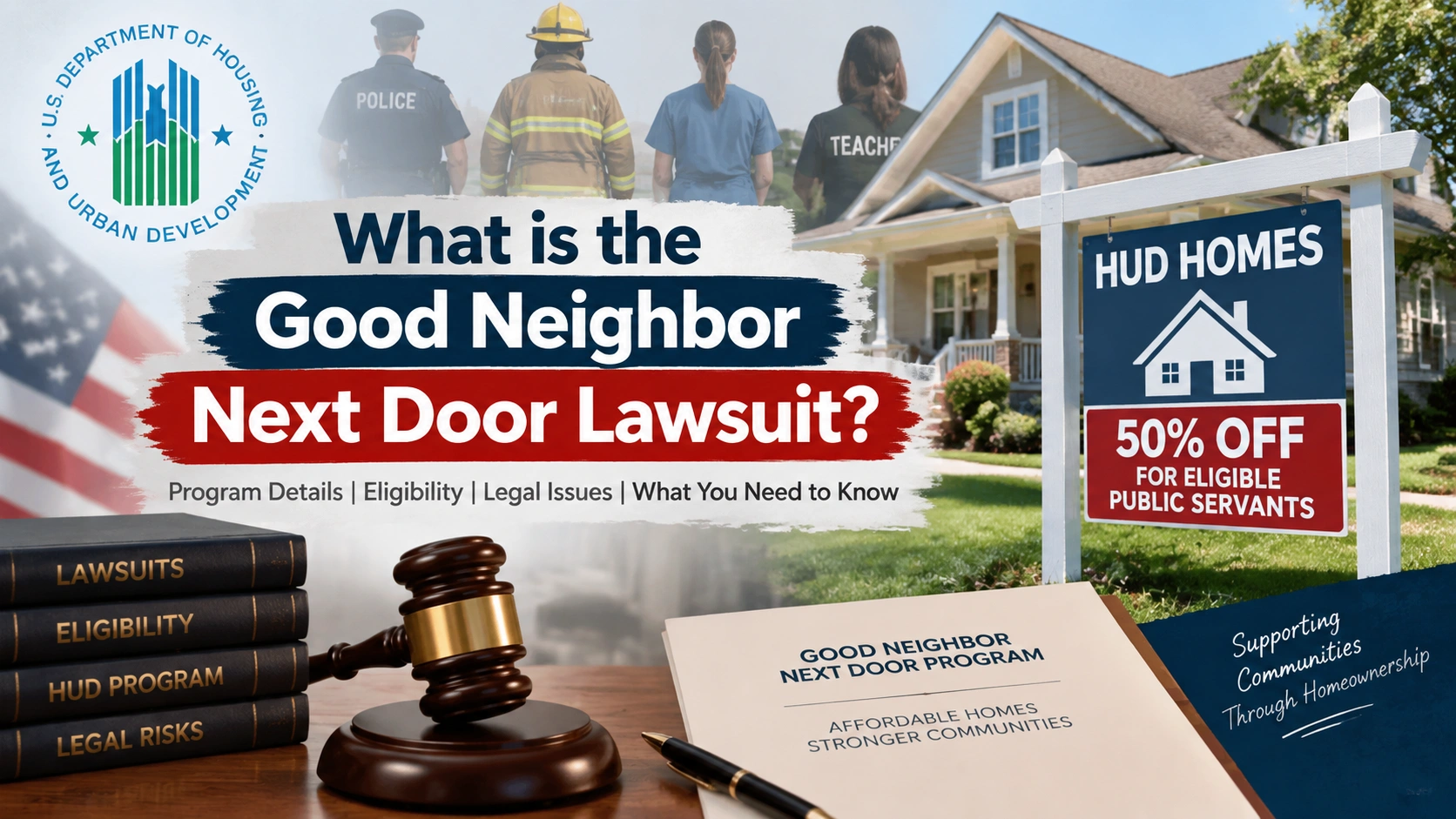
What does Good Neighbour Next Door actually mean? In a legal sense, terms like these aren’t really common. So what does this mean? This is a federal program that applies in the United States. Essentially, it is a program by the U.S. Department of Housing and Urban Development. This special program is not for the general public.
A Good Neighbor Next Door (GNND) program gives eligible public servants a chance to buy specific HUD homes for 50% of the market value. Participants must meet eligibility criteria and live there as the primary resident for three years.
The program brings together federal rules, contracts, financing needs, and private deals, so conflicts can arise over who follows the rules and who doesn’t. We are LawSenior, covering major lawsuit events around the world, and here is everything you need to know about the Good Neighbour Next Door lawsuit.
How the Good Neighbor Next Door Program Works
GNND supports neighborhood revitalization by encouraging teachers, law-enforcement officers, firefighters, and emergency medical technicians to become homeowners in the communities they serve. This special initiative is for all public servants.
HUD properties are available to eligible participants at 50% off the listed price. Most purchasers obtain an FHA-insured mortgage and take out a second mortgage for the discount.
Are there More Eligibility Requirements?
If the participant meets the occupancy requirement, that second mortgage is not payable until the participant’s monthly payments.
Eligibility is closely tied to the participant’s profession, which means it observes the employment status and the service area. The eligible public servant must be part of the local community or associated with the locality where the property is located.
One important fact is that these requirements have, for quite obvious reasons, become central to eligibility disputes.
Why Lawsuits Can Arise
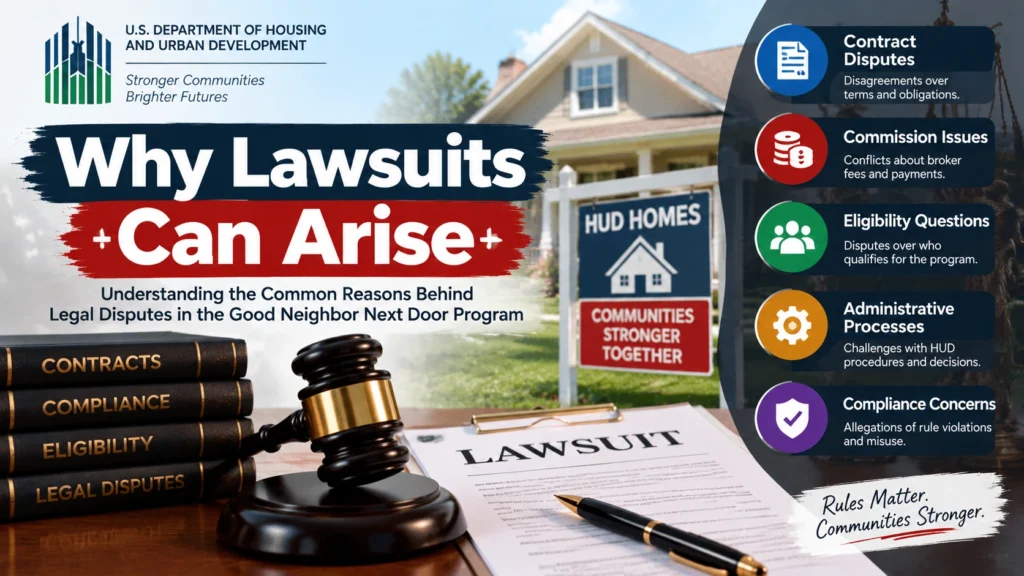
Typically, GNND lawsuits target a specific aspect of the program rather than the program as a whole. Lawsuits can involve different industries and organizations, but many cases focus on contracts, compliance, and consumer concerns. Understanding previous legal disputes can help readers recognize common patterns. For example, reviewing cases like the Isotonix Lawsuit provides additional information about how legal claims and business practices can lead to court discussions.
Conflicts have been publicized over contracts, commissions, eligibility, administrative processes, and compliance.
Case Study. 1
The Northwest Title Agency, Inc. v. United States case involved a title company that closed HUD homes and claimed it was entitled to seek extra closing costs from home purchasers. The government relied on the contract’s “all costs” clause and the “no closing costs” clause, which made closing costs due at closing.
The Court of Federal Claims ruled for the government, and the Federal Circuit upheld that decision. The case illustrates how strictly courts enforce HUD contracts.
Case Study 2
The other HUD closing-services contractor was in Trust Title Co. v. United States. HUD terminated the default contracts, and the company protested.
The court upheld HUD’s action, further emphasizing the need to comply with federal contracting requirements.
Broker Commission Disputes
Private commission arrangements can create another avenue for litigation. In Silberberg v. Federated Homes, a broker alleges he was entitled to a commission related to a GNND transaction in Newark, New Jersey.
The buyer and the listing broker had agreed to pay a commission, and the listing broker would get HUD’s standard commission.
The appellate court allowed the parties to pursue certain contract claims and dismissed certain fraud claims. The disagreement is a prime example of why brokers need written commission agreements.
Facing Eligibility Challenges and HUD
Kaetzel v. Secretary of HUD, No. 2025, challenged HUD’s treatment of two firefighters who wanted to purchase GNND properties. HUD found that they did not have work locations that met the program’s locality requirements.
A real estate agent brought the challenge, but the federal court dismissed the case because the broker lacked standing to sue on the firefighters’ behalf. The distinction matters: A challenger can have a different legal position on eligibility than an agent or other third party.
Occupancy and Misrepresentation Risks
One of the program’s most significant requirements is that the building be occupied for three years. If participants certify that they occupy a GNND property that is not actually theirs, they could face significant penalties, such as losing the discount and possibly having to repay.
While false certification of occupancy was not part of a GNND buyer lawsuit, a Louisiana employment case involving the same practice illustrates the seriousness of such conduct.
How Legal Risks Can Be Reduced
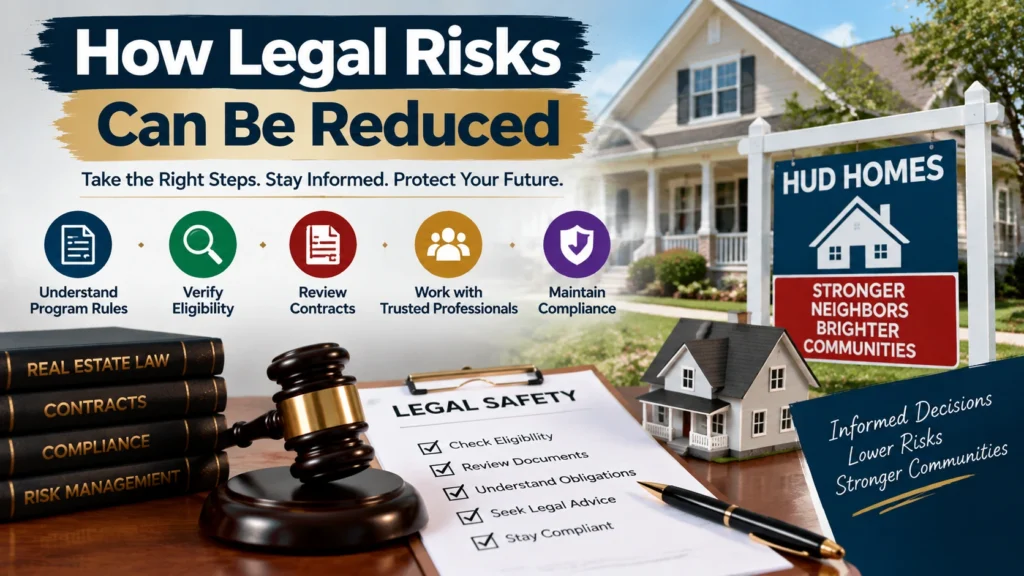
Before accepting an offer, GNND participants should confirm with the offerer that they qualify, that the place of employment meets HUD requirements, and that closing documents have been reviewed. They should keep records to support employment, eligibility, occupancy, and communications with HUD.
Real estate professionals should have commissions and responsibilities in writing. Select closing companies or contractors based on HUD contracts, not industry custom.
Legal matters related to businesses, agreements, and official records can sometimes become complicated during disputes. People involved in property transactions or legal processes should also understand how proper documentation works. Tools like a South Carolina corporation search can help individuals verify business information and maintain accurate records when dealing with legal or financial matters.
What Does This Mean for Prospective Buyers
A GNND purchase shouldn’t be treated like a standard discounted home sale. Buyers need to understand the restrictions, financing plan, and occupancy certification. They also need to understand what the implications are of selling or moving out before the property’s sale/move-out date ends.
This is an important point. Situations can change, so it is best for the participant to get advice on what to do before doing something that may breach their agreement. In most cases, courts enforce HUD’s requirements closely. A careful review before closing costs far less than resolving a dispute afterwards.
Conclusion
In the end, a Good Neighbor Next Door lawsuit may raise various legal issues that vary by circumstance. Discounts have their compliance requirements. Buyers and professionals should know the rules.
They need to document them, follow occupancy requirements, and seek professional advice if they have questions to protect their interests and help prevent disputes.