Premises Liability Law: Your Rights After an Injury
Premises liability law protects people who suffer injuries because of unsafe conditions on someone else’s property. Property owners and businesses must take reasonable steps to prevent accidents and protect visitors from foreseeable dangers. A wet floor, broken staircase, or poorly maintained walkway can cause serious injuries. Understanding your legal rights can help you determine who may be responsible for an accident and when you can seek compensation.
What Is Premises Liability Law?
Premises liability law is an area of personal injury law that deals with accidents caused by dangerous property conditions. It explains when property owners, landlords, tenants, and businesses may be legally responsible for injuries. These parties must follow safety rules and take reasonable steps to protect people who enter their property. However, an injury on someone’s property does not automatically mean the owner is legally responsible.
The law often focuses on whether the responsible party acted with reasonable care. For example, a store may face a claim if employees ignore a dangerous spill that causes a customer to fall. Courts examine the accident, the condition of the property, and the actions of everyone involved. Specific legal duties vary by state, making local laws important in every injury case.
How Does Premises Liability Law Work?
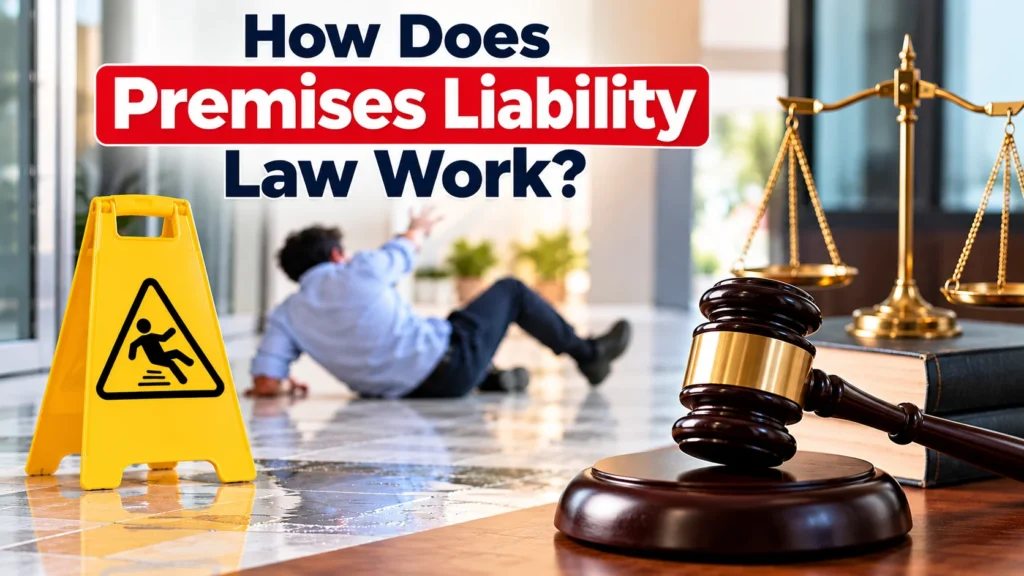
This legal principle requires property owners and other responsible parties to address hazards when the law requires them to do so. They may need to inspect their property, repair dangerous conditions, or provide clear warnings. When someone suffers an injury, the court considers whether the responsible party failed to meet a legal duty. The injured person must usually show that this failure caused actual harm.
For example, imagine a customer walking through a shopping mall and falling on a damaged staircase. If management knew about the broken steps but failed to repair them, the customer may have a valid injury claim. However, the outcome also depends on whether management had a legal duty and whether the damage caused the fall. Evidence of negligence plays a major role in determining legal responsibility.
Common Types of Premises Liability Accidents
Unsafe property conditions can cause accidents in homes, stores, offices, hotels, and public buildings. Some injuries result from poor maintenance, while others involve unsafe equipment or missing safety measures. Property owners should identify foreseeable risks and take reasonable action to reduce them. The following table explains several common accidents and their possible causes.
| Accident Type | Common Cause | Possible Injury |
| Slip and fall | Wet floors or slippery surfaces | Broken bones or back injuries |
| Trip and fall | Uneven sidewalks or loose carpets | Sprains or head injuries |
| Staircase accidents | Broken steps or missing handrails | Fractures or spinal injuries |
| Falling objects | Unsecured merchandise | Head or shoulder injuries |
| Swimming pool accidents | Unsafe pool areas | Drowning or serious injuries |
| Inadequate security | Failure to address foreseeable crime risks | Physical assault injuries |
| Elevator accidents | Defective equipment or poor maintenance | Crush injuries or fractures |
Slip and Fall Accidents
Slip and fall accidents are among the most common property-related injury claims. These accidents often happen in supermarkets, restaurants, apartment buildings, and workplaces. Spilled liquids, icy walkways, and freshly cleaned floors can create dangerous conditions. A property owner may face liability if they fail to address a hazard they knew or reasonably should have known about.
Inadequate Security Accidents
Some injury claims involve assaults or other criminal acts on private property. Hotels, shopping centers, and apartment complexes may have duties to provide reasonable security under certain circumstances. Courts may consider previous criminal activity, foreseeable risks, and the security measures available. However, property owners do not automatically bear responsibility for every crime that occurs on their premises.
Who Is Responsible for Injuries on Someone Else’s Property?
Responsibility often depends on who owns, occupies, manages, or controls the dangerous area. A property owner may be responsible for unsafe conditions, but another party may also share liability. For example, a maintenance company could face a claim if its careless repairs caused an accident. Courts examine property control, maintenance duties, and the facts surrounding the injury.
Landlords generally have responsibilities for shared spaces such as hallways, staircases, and parking areas. Business owners must take reasonable precautions to protect customers from foreseeable dangers. Tenants may also have responsibilities for areas they control, depending on the lease and local laws. The person who owns the property is not always the only person legally responsible.
Duty of Care for Different Types of Visitors
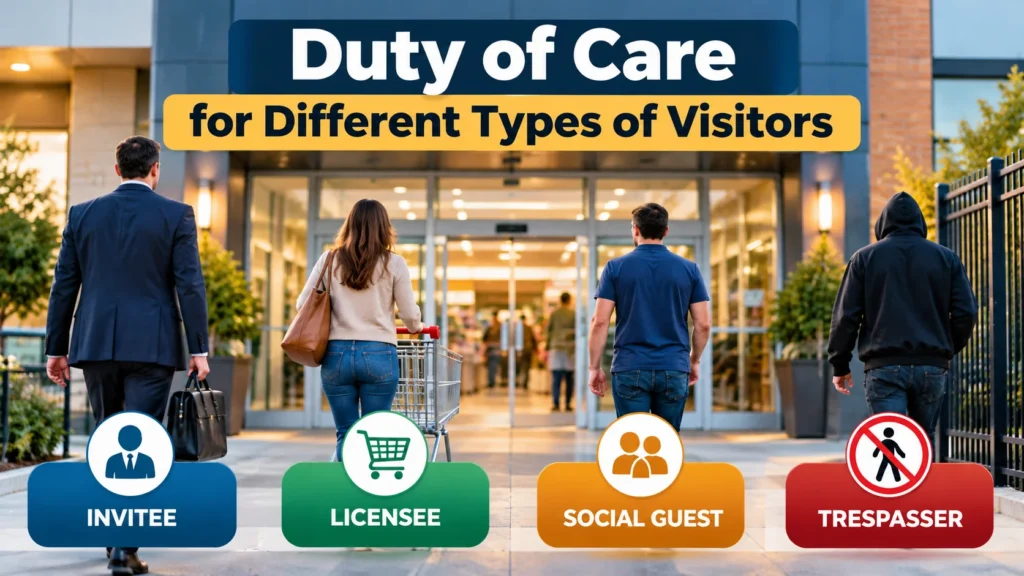
In many states, premises liability law considers why someone entered the property. Traditional legal rules divide visitors into invitees, licensees, and trespassers. These categories can affect the level of protection a visitor receives under the law. However, some states use a general reasonable-care standard instead of these traditional classifications.
| Visitor Type | Description | Typical Legal Protection |
| Invitee | Customer or person visiting for a business purpose | Reasonable inspections, repairs, and warnings |
| Licensee | Social guest or permitted visitor | Warnings about certain known hidden dangers |
| Trespasser | Person entering without permission | Limited protection, with important exceptions |
| Child trespasser | Child entering without permission | Special protections may apply to certain hazards |
Invitees and Licensees
An invitee usually enters a property for a business purpose, such as shopping at a store. A licensee often enters with permission for personal reasons, such as visiting a friend. In states that recognize these categories, owners generally owe invitees a greater duty of care. The exact duties depend on state law and the danger involved.
Trespassers and Child Safety
Trespassers usually receive less legal protection because they enter property without permission. However, property owners generally cannot deliberately injure trespassers or act with certain forms of reckless disregard. Special rules may also protect children from dangerous artificial conditions that attract them onto property. Courts consider the child’s age, the danger, and whether the owner could reasonably prevent the harm.
Elements Required to Prove a Premises Liability Claim
An injured person generally must establish four important elements to succeed in a negligence-based claim. These elements help courts determine whether the defendant bears legal responsibility for the injury. Without enough evidence, the injured person may struggle to recover compensation. Each element connects the defendant’s conduct to the harm suffered.
Civil lawsuits can involve different legal claims, and each claim requires specific evidence. High-profile cases, such as the Shannon Sharpe lawsuit, also show why understanding allegations and legal procedures matters. However, that case involves different legal issues from premises liability.
| Legal Element | What It Means |
| Duty of care | The defendant owed the injured person a legal duty |
| Breach of duty | The defendant failed to meet that duty |
| Causation | The failure caused the injury |
| Damages | The injured person suffered actual losses |
Proving that the property owner knew about a dangerous condition can strengthen a claim. Courts often distinguish between actual notice and constructive notice when examining unsafe conditions. Actual notice means the responsible party knew about the hazard. Constructive notice means the party reasonably should have discovered the danger through proper care.
What Compensation Can Victims Recover?
People injured because of unsafe property conditions may qualify for financial compensation. The amount depends on injury severity, medical costs, lost income, and applicable legal rules. Courts may also consider lasting disabilities and the effect of injuries on daily life. Compensation aims to address proven losses rather than guarantee a fixed payment.
Medical expenses can include emergency treatment, surgery, medication, rehabilitation, and future care. Lost wages may cover income missed during recovery or reduced earning ability after a serious injury. Some claims also include compensation for physical pain, emotional distress, and reduced enjoyment of life. Punitive damages may be available in rare cases involving especially serious misconduct.
What Should You Do After a Premises Liability Accident?
After an accident, getting medical attention should be the first priority. A doctor can identify injuries and create medical records that may support a future claim. If possible, take photographs of the dangerous condition before someone repairs or removes it. Report the incident to the property owner or manager and request a copy of the report.
Keep medical bills, treatment records, photographs, and the contact details of any witnesses. These documents can help explain how the accident happened and what losses followed. Avoid making guesses about who caused the accident before reviewing the available evidence. Consulting a qualified personal injury attorney can help you understand your options and filing deadlines.
Common Defenses in Premises Liability Lawsuits
Property owners and insurance companies may challenge injury claims using several legal defenses. They might argue that the danger was obvious or that the injured person failed to act carefully. Some defendants claim they had no reasonable opportunity to discover or repair the hazard. Courts review these arguments alongside the evidence and the applicable state laws.
Comparative negligence can reduce compensation when an injured person shares responsibility for an accident. In some states, even a small amount of fault can prevent recovery under contributory negligence rules. Other defenses include assumption of risk and failure to file within the legal deadline. The outcome depends on the jurisdiction and the specific facts of the case.
Legal defenses vary depending on the type of lawsuit and the allegations involved. For example, the Chobani lawsuit involves disputes over product labeling, marketing claims, and consumer protection. Although these issues differ from premises liability, both illustrate how evidence and applicable laws affect legal disputes.
How Long Do You Have to File a Premises Liability Lawsuit?
Every state sets deadlines for filing personal injury lawsuits through statutes of limitations. These deadlines vary, and certain circumstances may extend or shorten the filing period. Claims involving government property can have additional notice requirements and shorter deadlines. Missing an applicable deadline may prevent an injured person from pursuing compensation.
For this reason, victims should preserve evidence and review their legal options promptly. Medical records, security footage, and witness accounts can become harder to obtain over time. An attorney can identify the relevant deadline and explain the requirements for a particular claim. Acting early can make it easier to investigate the accident and protect legal rights.
Frequently Asked Questions
What is premises liability law?
Premises liability law holds property owners or other responsible parties accountable for injuries caused by unsafe property conditions. It allows injured people to seek compensation when they can prove negligence.
What is an example of premises liability?
A common example is a customer slipping on a wet floor in a grocery store. If the store knew or should have known about the hazard and failed to address it, it may be legally responsible.
What are the four elements of premises liability?
The four main elements are duty of care, breach of duty, causation, and damages. An injured person generally must prove these elements to establish a negligence-based premises liability claim.
Who can be held liable in a premises liability case?
Property owners, landlords, business operators, tenants, or property managers may be held liable for unsafe conditions. Responsibility depends on who controlled the property, their legal duties, and the circumstances of the accident.
Conclusion
Premises liability law helps protect visitors from preventable injuries caused by unsafe property conditions. It encourages property owners, landlords, and businesses to maintain reasonably safe environments. Injured people may seek compensation when they can prove negligence, causation, and actual damages. Understanding visitor rights, legal duties, and filing deadlines can help people make informed decisions after an accident.