
Civil vs Criminal Law: Rights, Rules, and Legal Consequences
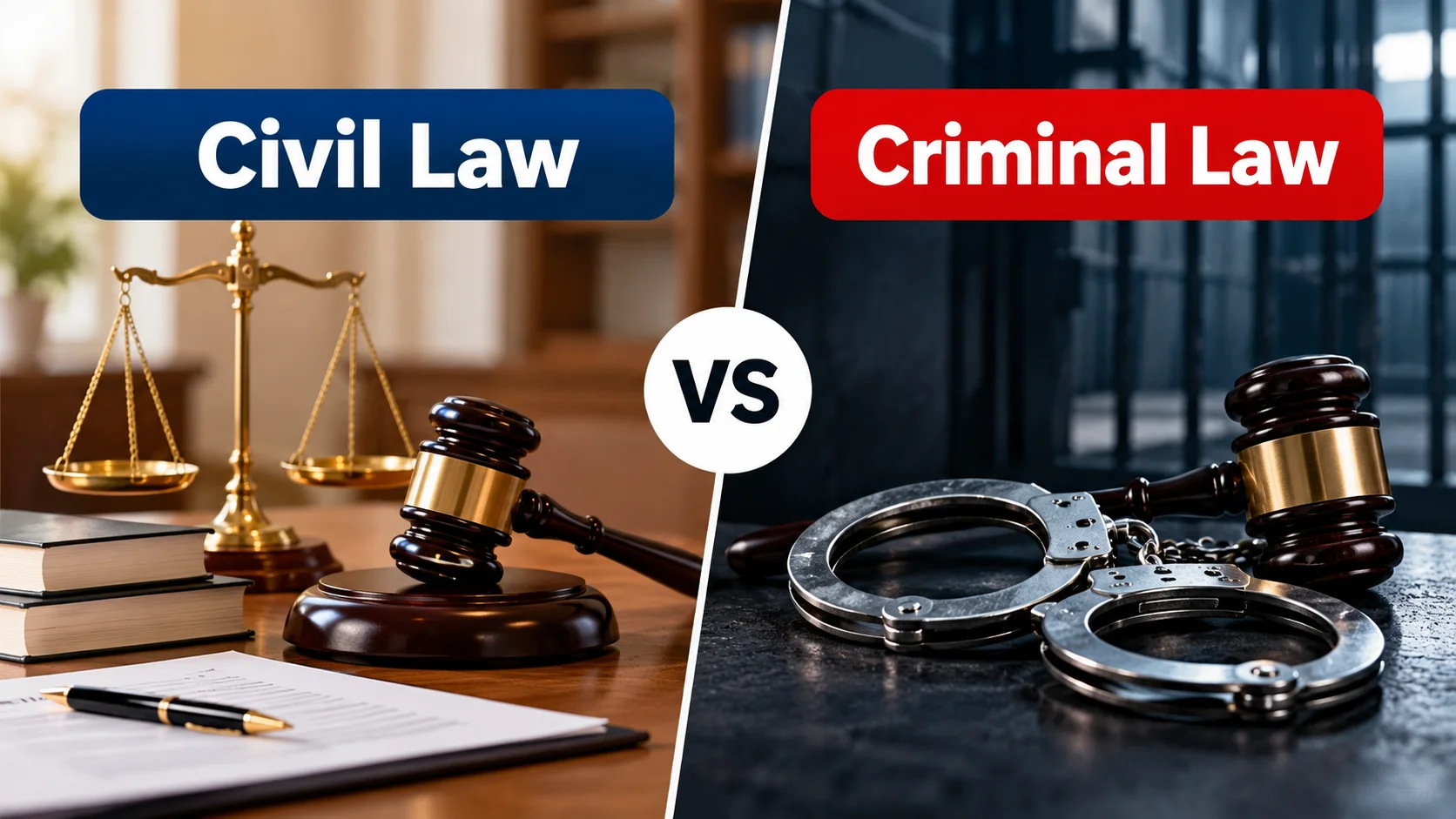
Understanding civil vs criminal law helps people learn how the legal system protects their rights. Both branches of law handle legal problems, but they serve different purposes. Civil law focuses on disputes between people, businesses, and organizations. Criminal law deals with crimes that violate public laws and threaten society.
The legal system uses different rules to handle civil and criminal cases. These differences include legal procedures, evidence, penalties, and court decisions. A civil case often involves money, property, or personal rights. A criminal case may involve imprisonment, fines, or other legal punishment.
What Is Civil Law?
Civil law handles legal disputes between individuals, companies, and other parties. It helps people resolve disagreements and protect their legal rights. A person may file a civil lawsuit when another party causes harm or breaks an agreement. Courts can award financial compensation or order someone to take specific action.
For example, a homeowner may sue a contractor who fails to complete agreed work. The homeowner can request money for the financial loss. Civil courts also handle divorce, child custody, property disputes, and personal injury claims. These cases generally focus on legal responsibility rather than criminal punishment.
Civil law also covers consumer disputes and financial claims. For example, the cash app class action lawsuit settlement relates to a civil legal process in which eligible consumers may seek compensation. Class action lawsuits allow groups of people with similar legal claims to pursue remedies together. These cases generally focus on resolving disputes rather than imposing criminal punishment.
What Is Criminal Law?

Criminal law deals with actions that violate laws established by the government. These laws protect public safety, property, and the rights of individuals. Police investigate suspected crimes, while prosecutors decide whether to bring criminal charges. Courts determine guilt and impose sentences when the prosecution proves its case.
Common criminal offenses include theft, robbery, assault, fraud, and murder. Criminal penalties may include imprisonment, probation, fines, or community service. The punishment depends on the offense and the applicable law. Criminal cases also protect defendants through important legal rights and procedures.
Civil vs Criminal Law: Major Differences
The main difference between civil vs criminal law involves the purpose of each legal case. Civil courts usually resolve disputes and provide remedies for legal harm. Criminal courts determine whether someone committed a crime and deserves punishment. Both systems rely on evidence, judges, and established legal procedures.
| Feature | Civil Law | Criminal Law |
|---|---|---|
| Main purpose | Resolve legal disputes | Enforce criminal laws |
| Case filed by | Plaintiff | Government prosecutor |
| Defendant | Person or organization being sued | Person or organization facing charges |
| Common examples | Divorce, contracts, personal injury | Theft, assault, murder |
| Burden of proof | Usually preponderance of evidence | Beyond a reasonable doubt |
| Court outcome | Liability or no liability | Guilty or not guilty |
| Possible penalties | Damages or court orders | Prison, fines, or probation |
| Legal responsibility | Civil liability | Criminal guilt |
| Settlement | Often possible | Plea agreements may be possible |
These differences reflect general rules in the United States. Individual states and countries may follow different procedures. Some civil cases also involve government agencies rather than private individuals. The exact rules depend on the court and the nature of the dispute.
Common Examples of Civil Law Cases
Civil courts handle many disputes that affect everyday life. A personal injury lawsuit may follow a car accident or unsafe property condition. Contract disputes arise when someone fails to follow a legal agreement. Family courts also resolve divorce, child support, and custody matters.
Property disputes may involve land ownership, rental agreements, or boundary disagreements. Businesses may file lawsuits over unpaid debts or broken contracts. People can also seek compensation for damage caused by negligence. The court examines the evidence before deciding whether someone has civil liability.
Common Examples of Criminal Law Cases
Criminal courts handle offenses that the government considers violations of public law. Theft involves unlawfully taking property under the applicable criminal statute. Assault cases may involve threats or physical attacks, depending on local law. Fraud cases often involve deception intended to obtain money or property.
Serious crimes may carry longer prison sentences and larger financial penalties. Less serious offenses may result in fines, probation, or shorter jail sentences. Courts consider the offense, relevant laws, and other sentencing factors. A criminal conviction can also affect employment and other areas of life.
Burden of Proof in Civil and Criminal Cases
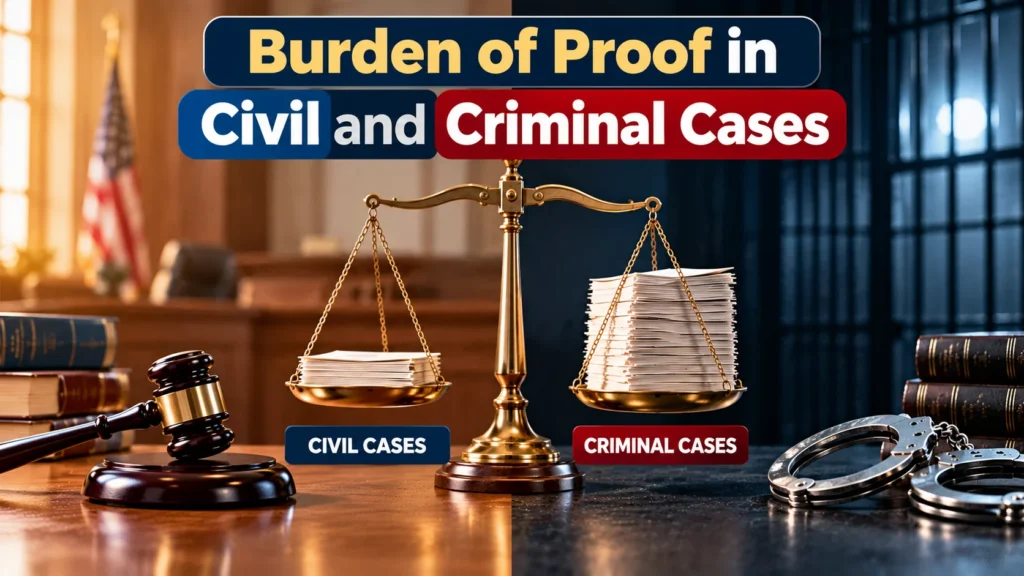
The burden of proof determines how strongly a party must support its legal claims. In most American civil cases, plaintiffs must prove their claims by a preponderance of the evidence. This means the evidence must show that their claims are more likely true than not. Some civil cases require a higher standard called clear and convincing evidence.
Criminal cases use a stricter standard known as beyond a reasonable doubt. Prosecutors must present enough evidence to establish the defendant’s guilt under this standard. Defendants do not need to prove their innocence. This higher standard helps protect people from wrongful criminal convictions.
How Does a Civil Court Case Work?
A civil case usually begins when the plaintiff files a complaint in court. The complaint explains the dispute and describes the requested legal remedy. The defendant receives notice and can respond to the allegations. Both parties may then exchange documents, witness information, and other evidence.
This evidence-sharing process is known as discovery. Lawyers may negotiate a settlement before the case reaches trial. If the parties cannot resolve the dispute, a judge or jury may decide the case. The court may award damages or issue an order requiring specific action.
Understanding legal rights also helps people make important financial and personal decisions. For example, a durable power of attorney allows someone to appoint another person to handle certain legal or financial matters on their behalf. This legal document generally remains effective if the person who created it becomes incapacitated. Knowing how these civil legal arrangements work can help individuals protect their interests and plan for the future.
How Does a Criminal Court Case Work?
A criminal case often begins when law enforcement investigates a suspected offense. Police collect evidence, interview witnesses, and identify possible suspects. Prosecutors review the available information and decide whether to file charges. Courts then follow the legal steps required for the particular offense.
The defendant may enter a guilty or not guilty plea during court proceedings. Some cases end through plea agreements, while others proceed to trial. At trial, prosecutors present evidence to establish criminal guilt. If the court finds the defendant guilty, the judge determines the appropriate sentence.
Civil vs Criminal Law: Punishments and Legal Consequences
Another important difference in civil vs criminal law concerns the consequences of losing a case. Civil courts usually focus on compensation and legal remedies. A defendant may need to pay damages or follow a court order. Criminal courts can impose punishment for conduct that violates criminal statutes.
| Civil Case Outcomes | Criminal Case Outcomes |
|---|---|
| Financial compensation | Imprisonment |
| Property-related orders | Criminal fines |
| Injunctions | Probation |
| Contract enforcement | Community service |
| Declaration of legal rights | Restitution to victims |
Civil cases generally do not impose imprisonment as punishment for the underlying civil claim. However, violating certain court orders can lead to contempt proceedings and possible detention. Criminal penalties depend on the law and the seriousness of the offense. Both systems aim to enforce legal rights and responsibilities.
Can One Incident Lead to Civil and Criminal Cases?
One incident can create both civil and criminal legal consequences. For example, a driver may cause an accident while driving under the influence. Prosecutors may bring criminal charges because the driver allegedly violated traffic laws. The injured person may also file a civil lawsuit for compensation.
The two cases usually follow separate legal procedures in the United States. A criminal court decides whether the defendant committed a criminal offense. A civil court determines whether the defendant owes compensation or another legal remedy. Different standards of proof can also produce different outcomes.
Rights of Defendants in Civil and Criminal Cases
Defendants have legal rights in both types of court proceedings. Civil defendants can respond to complaints, present evidence, and challenge opposing claims. They may hire lawyers to represent their interests during negotiations and trials. Courts must follow applicable procedural rules when resolving disputes.
Criminal defendants receive additional protections because their freedom may be at risk. In the United States, these protections include the presumption of innocence and the right against self-incrimination. Eligible defendants also have the right to appointed counsel in certain criminal proceedings. These protections help courts conduct fair trials and prevent unlawful punishment.
Why Is Understanding Civil and Criminal Law Important?
Knowing the difference between civil vs criminal law helps people understand their legal options. Someone facing a contract dispute may need to pursue a civil lawsuit. A person reporting theft or assault may need to contact law enforcement. Recognizing the correct legal process can prevent confusion and unnecessary delays.
This knowledge also helps people understand court notices, legal claims, and possible outcomes. Business owners can better recognize contract risks and financial responsibilities. Individuals can learn when to seek compensation or report suspected criminal activity. Legal advice remains important because every case involves different facts and laws.
Frequently Asked Questions
What Is the Main Difference Between Civil and Criminal Law?
Civil law resolves legal disputes and provides remedies for injured parties. Criminal law addresses offenses against public laws and allows the government to seek punishment. Both systems use courts, evidence, and legal procedures to reach decisions.
Is a Civil Case More Serious Than a Criminal Case?
Criminal cases can involve imprisonment and other serious penalties. Civil cases may involve large financial losses or important family and property rights. The seriousness of either case depends on its facts and possible consequences.
Can You Go to Jail for a Civil Case?
A person generally does not go to jail simply for losing a civil lawsuit. However, certain violations of court orders can result in contempt sanctions. Criminal cases can lead directly to imprisonment when the law allows that sentence.
Can a Person Face Both Civil and Criminal Charges?
Yes, one incident can lead to separate civil and criminal proceedings. For example, an assault may result in criminal prosecution and a personal injury lawsuit. Each court applies its own rules and standards of proof.
Conclusion
Understanding civil vs criminal law is essential for recognizing how courts handle different legal problems. Civil law focuses on resolving disputes, protecting private rights, and providing remedies. Criminal law addresses offenses against public laws and allows courts to impose punishment. Both branches play important roles in maintaining fairness and legal accountability.
People should understand the differences in legal procedures, evidence, and possible outcomes. A single event may sometimes lead to both civil and criminal proceedings. The applicable rules depend on the country, state, and type of case. Consulting a qualified legal professional can help individuals understand their rights and choose appropriate legal action.




2 Comments